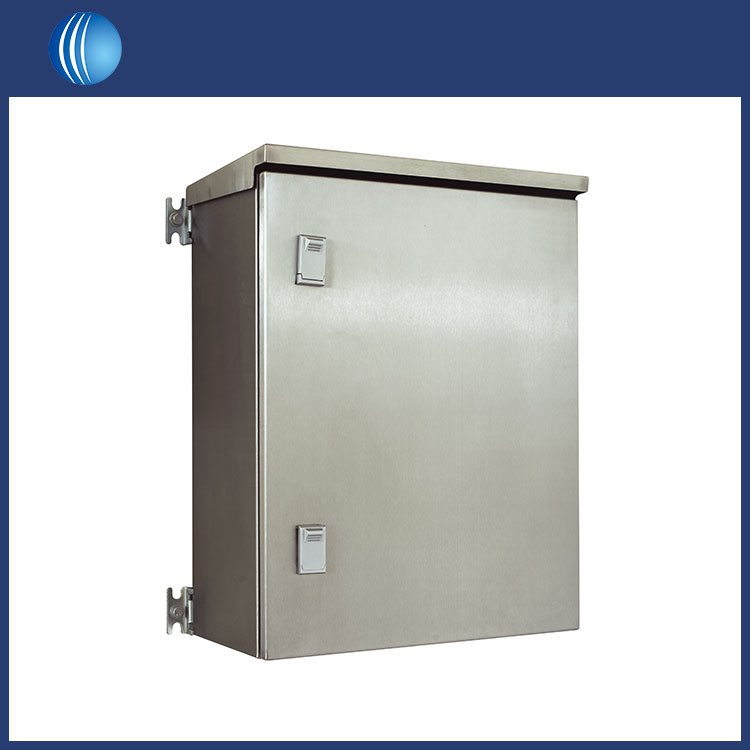
The Outdoor enclosure is exposed to the natural environment for extended periods and must continuously withstand multiple harsh interference.First, there are meteorological factors: heavy rain, heavy snow, and alternating high and low temperatures can cause the enclosure's seals to fail, allowing moisture to penetrate and cause short circuits in the components; second, there is dust and foreign object intrusion; third,salt spray in coastal areas and acidic and alkaline gases in chemical parks can accelerate the aging and corrosion of the enclosure's shell. All of these factors place specific demands on the enclosure's dustproof and waterproof performance.
The IP protection rating is the core standard for measuring the ability of electrical equipment enclosures to resist the intrusion of solid foreign objects and liquid penetration.The prefix IP represents the protection rating identifier, and the two numbers that follow correspond to different protection dimensions, which are independent and evaluated separately.the IP protection rating only covers solid and liquid protection and does not include protection against high temperatures, corrosion, lightning strikes, etc. These factors must be considered comprehensively when selecting an outdoor enclosure.
The core principle for selecting the IP protection rating of outdoor enclosure considering both the precision of the equipment and cost-effectiveness.For mild outdoor environments without significant dust or strong corrosion, IP54 is sufficient, as it can withstand splashing water from any direction and solid foreign objects larger than 1mm in diameter, offering the best cost-effectiveness.
For dusty environments, enhanced solid protection is needed, and IP65 or higher is recommended for complete dust protection; for rainy or waterlogged environments, enhanced liquid protection is required, and IP55 or IP65 should be chosen to withstand continuous water spray; for corrosive environments, IP66 or higher should be selected, along with corrosion-resistant materials such as stainless steel. Furthermore, if the cabinet contains precision communication or monitoring equipment, the rating should be increased to IP65 or higher to prevent fine dust and moisture from affecting equipment operation.
The core of choosing the IP protection rating for outdoor cabinets is precise matching.First, the severity of the outdoor environment is the key factor in selection, combined with the precision of the equipment inside the cabinet. The IP protection rating, as the core measure of dust and water resistance for outdoor cabinets, should be chosen reasonably based on the scenario requirements, and combined with auxiliary protection measures such as corrosion protection and lightning protection, to comprehensively ensure the long-term stable operation of outdoor equipment.