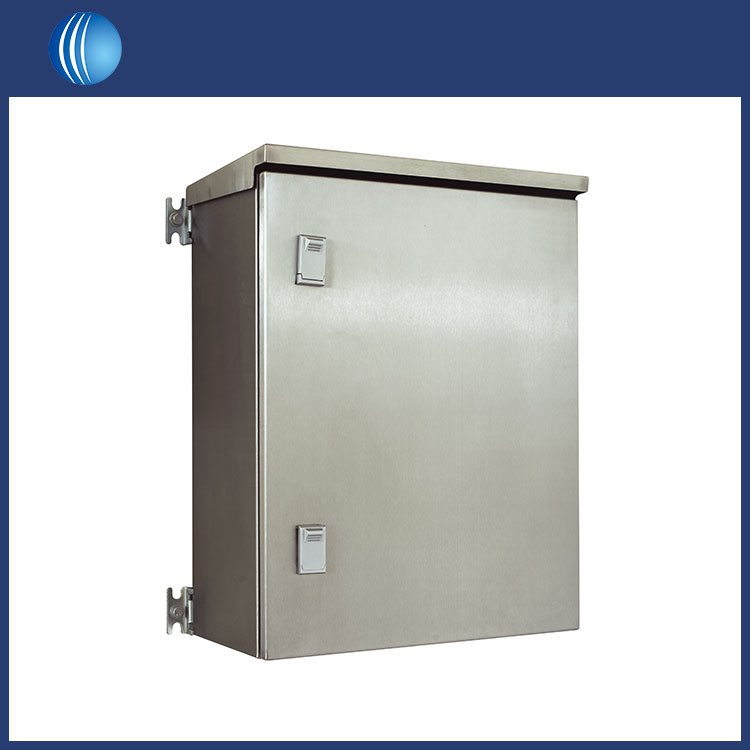
The steel thickness range for industrial server racks, generally between 0.8mm and 3.0mm. Thinner steel (0.8-1.2mm) is suitable for light-load scenarios, medium-thickness steel (1.5-2.0mm) is the first choice for general industrial scenarios, and thicker steel (2.5-3.0mm) is used for harsh, high-load environments. The selection principle is to match actual needs.
1.Selecting Steel Thickness Based on Usage Environment
For mild indoor environments (such as office server rooms, clean rooms, and general indoor control rooms), 0.8-1.2mm thick steel is sufficient. For general industrial workshops (such as machining workshops and assembly lines), with moderate dust levels, occasional impacts, and normal temperature and humidity, 1.5-2.0mm thick steel is the optimal choice. This thickness enhances the cabinet's structural rigidity, resisting minor collisions and deformations.For harsh outdoor or corrosive environments (such as outdoor substations, chemical plants, coastal areas, and mining sites), 2.0-3.0mm thick steel is required.
2.Selecting Steel Thickness Based on Cabinet Application
Steel thickness of 0.8-1.2mm industrial server racks have low load-bearing requirements and are mostly used in indoor environments; thinner steel can meet basic protection and structural needs.Steel thickness of 1.5-2.0mm cabinets need to withstand the weight of internal equipment for extended periods while maintaining structural stability. Medium-sized steel effectively prevents cabinet deformation and ensures the safety of internal components.These 2.5-3.0mm cabinets have extremely high requirements for load-bearing capacity and impact resistance. Thick steel can withstand the weight of heavy components and potential external impacts.
3.Selecting Steel Thickness Based on Cabinet Type
Small wall-mounted cabinets an use steel with a thickness of 0.8-1.2mm; large wall-mounted cabinets that support more components are recommended to use steel with a thickness of 1.5mm.
In mild environments, 1.0-1.5mm thick stainless steel is sufficient. For harsh, corrosive environments such as coastal areas and chemical plants, 1.5-2.0mm thick stainless steel is recommended, balancing corrosion resistance and structural strength.
General-purpose floor-standing distribution cabinets and control cabinets widely use steel with a thickness of 1.5-2.0mm; large floor-standing cabinets require steel with a thickness of 2.0-3.0mm to resist deformation and external impact, making them particularly suitable for outdoor or harsh industrial environments.
In Summary,The optimal steel thickness for industrial server racks are determined by the operating environment, rack purpose, and rack type. The core selection principle is to balance protection, load-bearing capacity, cost, and weight.