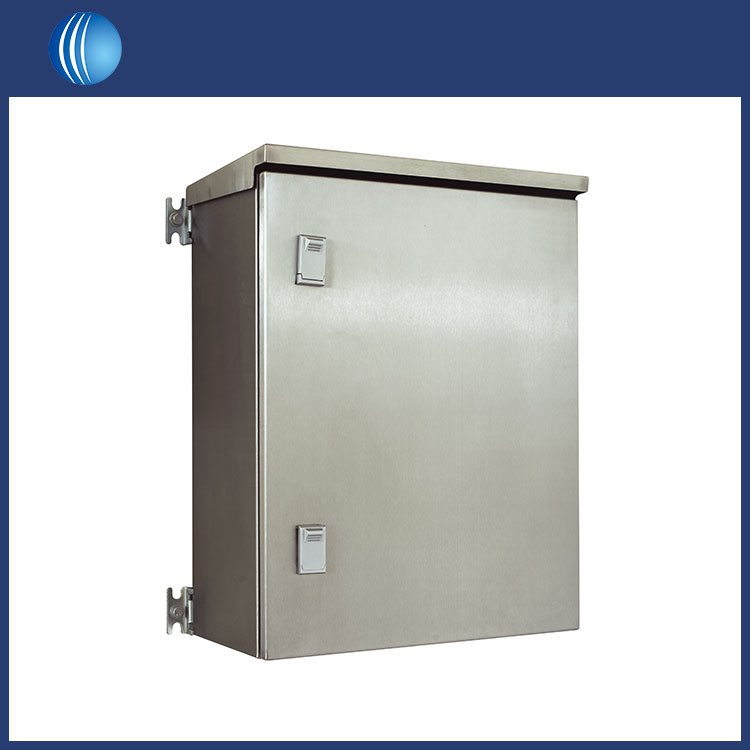
The casing of indoor control panels requires precise protection. The appropriate size and specifications should be selected based on the installation space, and the appropriate protective casing should be chosen according to the needs to avoid over-protection and wasting resources and costs. For a typical office or clean workshop, an IP54 rating is sufficient, effectively blocking dust and occasional moisture. In workshops or laboratories with high dust concentrations, an IP65 rating is required to prevent damage to internal electrical components from particulate matter.
Efficient space utilization and installation flexibility are equally important. While wall-mounted enclosures can save floor space in tight spaces, floor-standing enclosures with adjustable internal rails are suitable for computer rooms or laboratories with numerous devices, allowing for easy addition and removal of internal components. Cold-rolled steel offers excellent cost performance and is suitable for dry indoor environments. Stainless steel is ideal for laboratories where there is a slight presence of corrosive gases. Furthermore, enclosures containing high-power components such as frequency converters require built-in fans or heat sinks. Meanwhile, in air-conditioned control rooms, basic ventilation is sufficient for heat dissipation and reduced energy consumption.
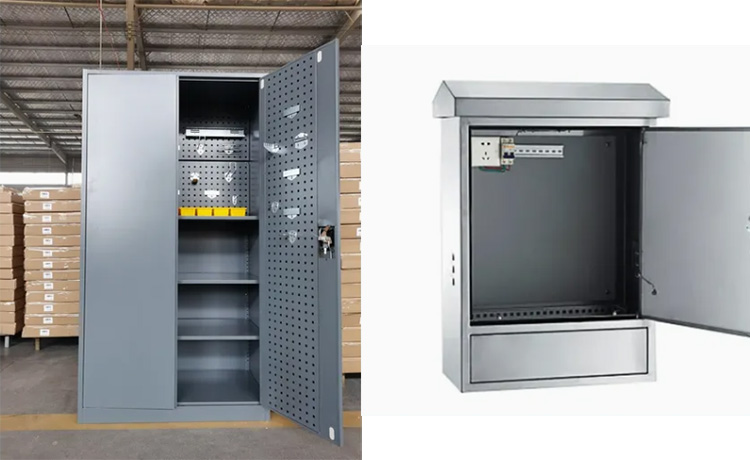
Control panel enclosures installed outdoors are exposed to harsher and more varied environments and require comprehensive protection. Ingress protection is a must. An IP66-rated enclosure is required to withstand rain, snow, strong sunlight, and sandstorms. In coastal areas, an IP67 or higher rating is required to resist salt spray corrosion. At the same time, the exterior of the enclosure must be UV-protected. UV-resistant ABS plastic or galvanized steel effectively slows material degradation caused by sunlight.
When selecting an outdoor installation enclosure, temperature control should also be taken into consideration. Extremely low temperatures can cause lubricants to freeze, while high temperatures can cause insulating materials to melt.Therefore, enclosures must be equipped with temperature control devices as needed. This can be a heater in cold climates, or an air conditioner or heat exchanger in hot environments. A double-insulated structure further stabilizes the temperature inside the enclosure.
Structural strength is also crucial. A thick steel frame is required to withstand wind loads and impacts from tree branches. Floor-standing enclosures require a waterproof base to prevent rainwater from seeping in through the bottom.
The choice of control cabinet enclosure depends on specific usage requirements; there are no specific standards.Indoor control cabinets must consider both precise protection and installation space.Outdoor control cabinets need to take into account the outdoor environment, the weather resistance and corrosion resistance of the cabinet, and structural strength.Choose according to your specific usage environment. You can contact us to tell us your needs and we will provide you with reasonable suggestions.