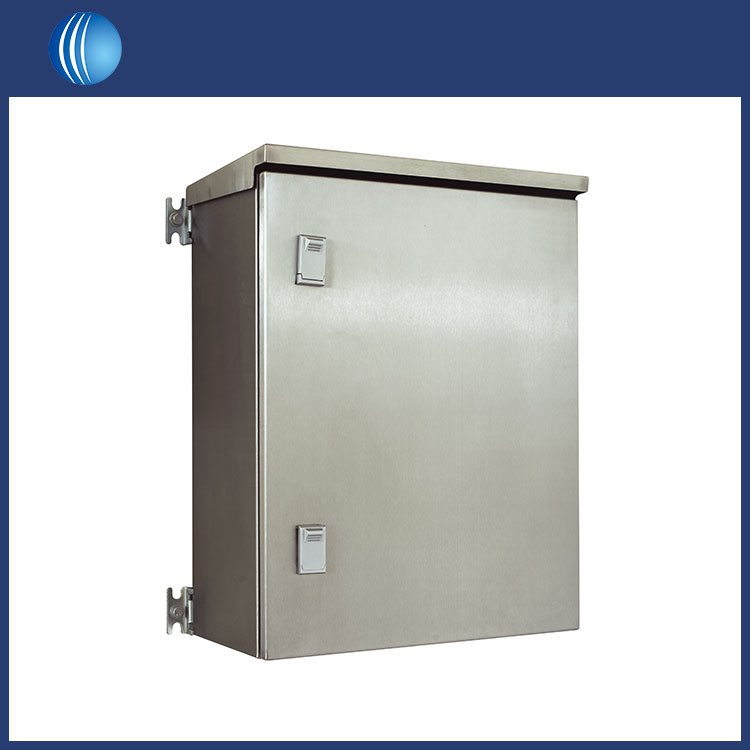
In industrial production workshops and automated operation scenarios, control cabinets are core infrastructure ensuring the stable operation of systems.
By definition, a control cabinet is an enclosed enclosure integrating key electrical components such as circuit breakers, relays, frequency converters, and programmable logic controllers (PLCs). Through standardized installation layouts and standardized wiring connections, it forms a complete electrical control unit. Its core function is to provide safety protection for electrical components and, as the core carrier of the industrial control system, undertakes the critical responsibilities of command distribution and operational control.
The core functional system of control cabinets is built around three dimensions: control, protection, and integration. These dimensions support each other to form a complete protection and control capability.
Control functionality, as a core requirement, receives signals from front-end sensors via a built-in PLC or dedicated controller.Based on preset control logic, it precisely adjusts key indicators such as motor start/stop and equipment operating parameters, providing a crucial guarantee for achieving production process automation.
Protection functionality focuses on safety; built-in circuit breakers and fuses can quickly disconnect circuits under abnormal conditions such as short circuits and overloads, while lightning protection modules effectively resist instantaneous overvoltage surges, mitigating equipment damage and safety risks at the source.

Integration functionality reduces redundancy and clutter in wiring through the compact layout of distributed electrical components, improving maintenance efficiency and reducing the impact of electromagnetic interference between components on system stability.
The importance of control cabinets in industrial environments stems from their dual value in ensuring production process stability and improving efficiency. The rigid requirements of industrial production for continuity and stability mean that malfunction of core equipment can lead to the shutdown of the entire production line, resulting in significant economic losses. Control cabinets, through precise real-time control and early fault warning mechanisms, can minimize unplanned downtime, providing reliable support for production continuity.
Meanwhile, modern industrial automation systems rely on the collaborative operation of multiple devices. As the hub for signal transmission and command scheduling, the control cabinet enables precise linkage between these devices. For example, in an automobile assembly line, it can coordinate the synchronous operation of robotic arms, conveying systems, and testing equipment, significantly improving production efficiency and operational accuracy.
Currently, control cabinets are widely used in various industrial scenarios: in chemical industry production workshops, they are responsible for the precise control of key process parameters such as reactor temperature and pressure; in the metallurgical field, they are responsible for controlling the operating rhythm of core equipment such as steel rolling and smelting; and in intelligent logistics and warehousing systems.The control cabinet remains the core hub for the stable operation of industrial systems, providing solid technical support for the efficient and safe development of industrial production.