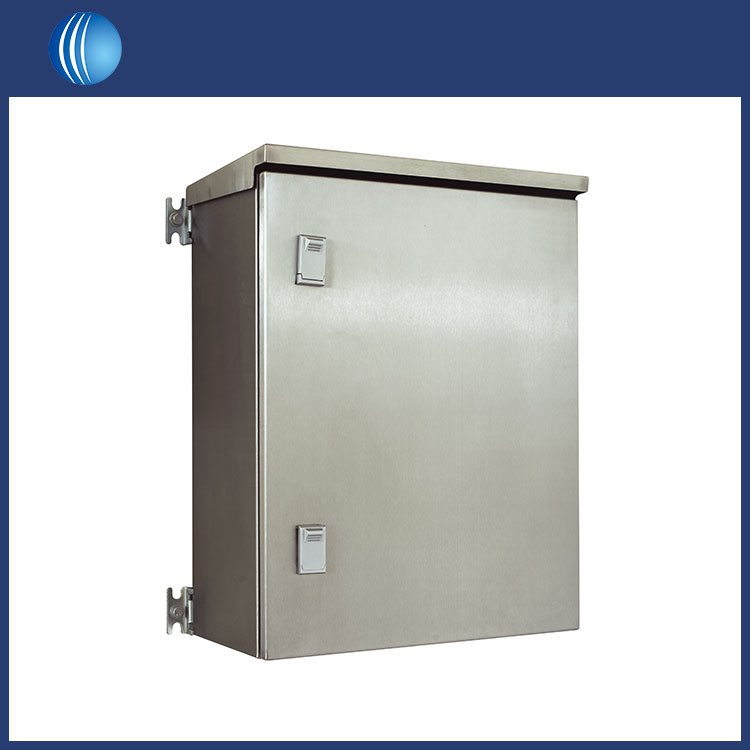
Here we recommend ideal steel plate thickness for different industrial scenarios.
We use these distribution cabinet enclosures in offices, malls, corridors, server rooms and light factories. These environments are clean, stable, and free from vibration, corrosive gas and impact. Basic dustproof and safety functions are enough here.
Small wall-mounted electrical boxes use 0.8 to 1.0 mm panels. They are light, easy to install and cost-effective, ideal for home and commercial use.
Medium floor-standing and PLC cabinets need 1.2 to 1.5 mm panels. This stops long-term deformation, ensures solid structure and smooth door use.
Machining workshops, assembly lines and production lines have regular vibration, minor knocks and lots of dust. Cabinets here need to resist dents and impacts. Thin panels easily lead to sagging doors, bent frames and broken locks.
For standard wall-mounted control boxes and operation panels in factories, go with 1.2 mm sheets. They’re much sturdier than regular indoor types, and hold up well against typical workshop vibration and bumps.
Mainstream floor-standing industrial distribution cabinets, frequency converter control cabinets, and power distribution cabinets generally follow a standard thickness of 1.5 mm to 2.0 mm. These provide robust frames and high load-bearing capacity, suitable for supporting high-power electrical equipment and enduring prolonged industrial vibration environments, effectively preventing equipment sinking and cabinet warping.
Outdoor distribution cabinet enclosures face harsh weather, sand and corrosion. Thin panels are forbidden.
We recommend 1.5 mm thick panels for outdoor units in communities, parks and road surveillance. Complete waterproof and dustproof design ensures long service life outdoors.
In severe harsh environments such as coastal salt-spray zones, chemical plants, mines, and construction sites, 2.0 mm to 2.5 mm thick panels must be used, preferably made of stainless steel or treated with heavy-duty anti-corrosion coatings.
Wall-mounted cabinets are fixed to walls for support, so they can’t hold much weight and don’t need extra-thick panels. Small wall boxes use 0.8–1.0 mm sheets, and medium control cabinets go with 1.2 mm. Thicker material would add too much load to the wall and cause safety risks.
Floor-standing cabinets support loads with their frames, being the mainstream industrial cabinet type. Standard power and control cabinets use 1.5 mm sheets. Heavy-duty high-voltage cabinets require 2.0 mm or thicker panels for reliable structure.
Stainless steel is stronger, so thinner sheets are acceptable. 1.2–1.5 mm stainless steel panels suit most indoor and outdoor anti-corrosion scenarios.
The core principle for selecting cabinet wall thickness is: thin for light-duty indoor use, medium for industrial workshops, and thicker for harsh outdoor environments. For small residential indoor enclosures, 0.8–1.0 mm is recommended; for medium-sized indoor industrial cabinets, 1.2–1.5 mm is preferred; standard industrial floor-mounted cabinets generally require 1.5–2.0 mm; while for severe outdoor, heavy-load, or highly corrosive environments,plates exceeding 2.0 mm must be used. So proper selection of Enclosure thickness is essential. It prevents deformation, loose components and protection failures, and keeps purchasing costs down.