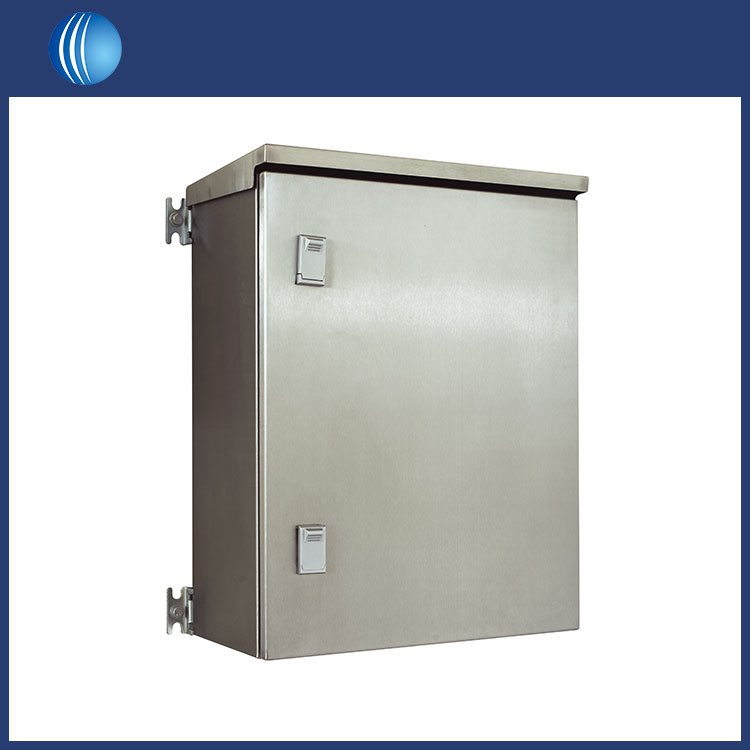
A distribution box’s core functions include distributing electrical energy to each load, monitoring the operation status of the power system, and cutting off the circuit in time when faults (such as overload, short circuit, and leakage) occur to protect equipment and personal safety.
Indoor Distribution Boxes are IP20-IP40, mainly preventing solid foreign objects (such as dust) and accidental contact; no special waterproof requirements, suitable for clean and dry indoor environments.Outdoor Distribution Boxes are IP55-IP67, with high waterproof, dustproof, and anti-foreign object performance; IP65 and above can prevent heavy rain washing and long-term exposure to harsh environments.
Indoor Distribution Boxes are made of cold-rolled steel plate, plastic, or aluminum alloy; the surface is treated with spray painting or electrophoresis, focusing on rust prevention and aesthetic appearance; the material thickness is moderate, meeting basic structural strength.
Outdoor Distribution Boxes adopt high-strength anti-corrosion materials, such as galvanized steel plate, stainless steel (304/316), or engineering plastic with anti-ultraviolet (UV) treatment; the surface is treated with anti-corrosion coating to resist oxidation and corrosion caused by wind, rain, and humidity.
Indoor Distribution Boxes adapt to indoor temperature range, generally -5℃~40℃; no special heat dissipation or cold protection design is required, relying on indoor natural ventilation to maintain temperature stability.Outdoor Distribution Boxes have strong temperature adaptability, suitable for -40℃~70℃ or even harsher temperature environments; equipped with heat dissipation devices (such as heat sinks, fans) or cold protection components (such as heating plates) to avoid equipment failure caused by extreme temperature.
Indoor distribution boxes have compact structure, small volume, focusing on space utilization; the door is usually a common hinged door, with simple sealing design; the internal layout is flexible, suitable for indoor installation and maintenance.
Outdoor distribution boxes have reinforced structural design, with thickened cabinet body and anti-collision edges; the door adopts a fully sealed structure with waterproof rubber strips to prevent water and dust from entering; some models are equipped with rain eaves to avoid direct rain; the internal layout is reasonable, with reserved space for heat dissipation and maintenance.
Indoor distribution boxes are installed in enclosed or semi-enclosed indoor environments (such as residential buildings, office buildings, data centers, and industrial workshops) where the environment is relatively stable, with small changes in temperature, humidity, and no direct exposure to wind, rain, dust, or sunlight. They focus on circuit management, space utilization, and aesthetic coordination with the indoor environment.
Outdoor distribution boxes are installed in open-air or semi-open outdoor environments (such as outdoor power stations, roads, communities, and industrial parks). They need to withstand harsh natural conditions such as wind, rain, snow, high temperature, low temperature, dust, and ultraviolet radiation.